Bagster Pickup: Service Area, Placement, Limits and Collection Costs
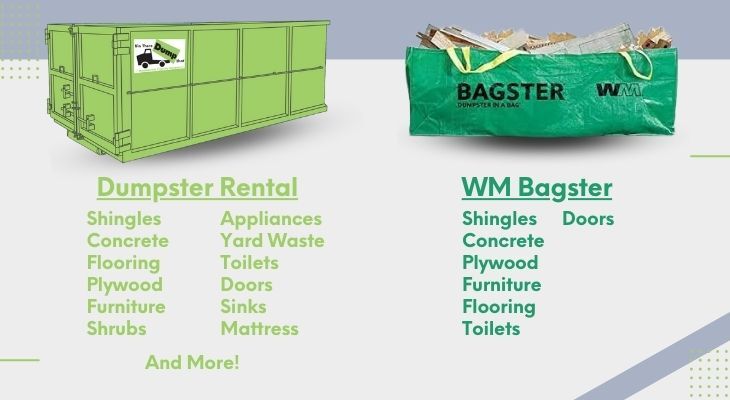
A Bagster is a fold-up dumpster bag sold by WM (Waste Management) at hardware and home improvement stores. You buy the bag, fill it, and then pay WM separately to collect it. Before you buy one, check four things: that WM collects in your area, that your debris fits the bag's limits, that the truck can reach where the bag will sit, and what the full cost comes to. If a hired crew might suit the job better than loading anything yourself, start by deciding how to compare self-loading rental with hired hauling.
Step 1: Check Bagster Service Coverage
Bagster collection isn't offered everywhere. WM's collection page asks for your ZIP or postal code to show if pickup is available at your address and what it costs there. Check this before you buy the bag. A bag you can't get collected is just a bag of debris you'll have to haul yourself.
While you're checking, confirm two area-specific rules:
Yard waste: WM says yard waste isn't accepted in all areas.
Restricted materials: WM says restricted materials may vary by area.
Step 2: Confirm Material and Weight Limits
WM's product pages list these specifications and limits for the Bagster bag:
Limit
What WM states
What it means for your project
Size
8 ft long, 4 ft wide, 2.5 ft tall
Fits full sheets of plywood or drywall laid flat
Capacity
3 cubic yards (606 gallons)
Larger cleanouts may need more than one bag and more than one collection
Maximum weight
Up to 3,300 lb
Weigh up heavy loads before you fill
Heavy debris
No more than one cubic yard of dirt, brick, rock, sod or concrete
A bag of mostly concrete or soil won't be collected
Fill height
Fill up to the top; the lifting straps must connect above the load
Nothing piled above the bag's edges
Prohibited items
Anything toxic or hazardous, including paint, oil, batteries, fluorescent bulbs or ballasts, appliances, electronics, food waste, railroad ties, tires, medical waste, pesticides and chemicals
Plan separate disposal for these before you start
WM states that a bag with unacceptable items won't be collected, and that you'll be responsible for disposing of the contents. Take paint, chemicals and batteries to a household hazardous waste drop-off instead.
Step 3: Measure Collection Clearance
WM collects the Bagster with a crane on the truck, so placement decides if pickup can happen. Pick the spot before you fill the bag. WM says never to move a Bagster once you've started filling it.
Check
WM requirement
Measured at your address
Distance from the truck
Center of the bag no more than 16 ft from where the truck parks on the street or in the alley
Distance from objects
At least 5 ft from structures, fences, trees and vehicles
Overhead
At least 18 ft of vertical clearance, clear of wires, trees and structures
Location
On your property only, not on public sidewalks or streets
Fences
The crane can reach over a 5 ft fence, but not a privacy fence
Driveway access
If the truck pulls into the driveway, a minimum width applies (WM's pages list both 10 ft and 12 ft; confirm when you schedule)
If you can't meet these on your lot, a Bagster probably isn't the right container. A roll-off dumpster is placed by the delivery truck where you and the operator agree, and has its own placement checks.
Step 4: Price Purchase and Collection
A Bagster is paid for in two parts: the bag at the store, and the collection fee from WM, which depends on your ZIP or postal code. WM takes payment when you schedule. Add both, plus any second bag, before comparing with other options.
Cost line
Where to find it
Your figure
Bag purchase (per bag)
Retailer price
Collection fee (per bag)
WM's ZIP or postal code lookup
Number of bags needed
Your estimate at 3 cubic yards each
Tax
Retailer and WM checkout
Possible extra fees
WM lists added fees when collection fails because of overloading, a damaged bag, prohibited items or non-payment
Total
Get a roll-off quote for the same job so you're comparing like with like. Our page on dumpster rental prices explains what a Bin There Dump That quote includes.
Step 5: Check Pickup Terms
WM's collection terms, as listed on its site:
Schedule online or by phone, and give the address, where the bag sits on the property and what's in it.
WM typically collects within five business days of the bag-ready date you choose.
Collections run Monday through Friday during daytime hours. WM's pages give slightly different windows, so confirm the hours when you schedule.
You don't need to be home for collection.
To cancel, WM asks for a phone call within one business day of the scheduled collection.
If your project has a fixed finish date, such as a closing or a move-out, build those five business days into the plan.
Step 6: Verify the Details With WM
Bagster terms can change and vary by area. Before you buy, confirm coverage, the collection fee, accepted materials and placement rules on WM's Bagster collection page or by phone, and note the date you checked.
A Bagster fits when your address is covered, the debris is light, there's one or two bags' worth, and the spot meets the clearance rules. If any of those fail, or the job keeps growing, it's time to compare a dumpster bag with a roll-off rental. A small dumpster rental takes heavier debris and has a set pickup date agreed with your local operator.
Bagster is a registered trademark of WM. Bin There Dump That is not affiliated with WM.