Dumpster Rental vs Self-Hauling: Trips, Time and Total Cost
Taking your own debris to the dump looks cheaper than a dumpster rental because the only number you see is the gate fee. The real comparison is the whole trip: how many loads your vehicle can carry, what the facility charges and accepts, the hours and fuel each round trip takes, and who is doing the lifting. This page gives you a way to put those numbers side by side with a written rental quote, using your own figures rather than ours, so the decision rests on your project and your area. If the alternative you’re weighing is a junk removal crew that loads for you, that is a different comparison: compare self-loading rental with hired hauling instead.
Step 1: Identify the Waste and Quantity
Everything else depends on what the pile is and how big it is, so measure before you compare. Walk the project and list:
Material type. Household junk, furniture, yard waste, drywall and lumber, roofing, concrete or soil. Heavy materials change the answer more than anything else, because they max out a pickup by weight long before they fill it.
Volume. Estimate in pickup-bed loads if that's how you'll haul, or in cubic yards if you're comparing to a bin. A standard pickup bed holds roughly two cubic yards level; use your own vehicle's bed dimensions rather than a rule of thumb.
Items with their own route. Mattresses, appliances with refrigerant, electronics, tires, paint and chemicals. These usually can't go in a bin and are often refused or surcharged at a landfill; they're a separate line in either option.
Timing. Is the debris produced all at once (a cleanout) or over days (a renovation)? Repeated trips suit a slow trickle; a bin suits a pile.
Sizes and What They Hold
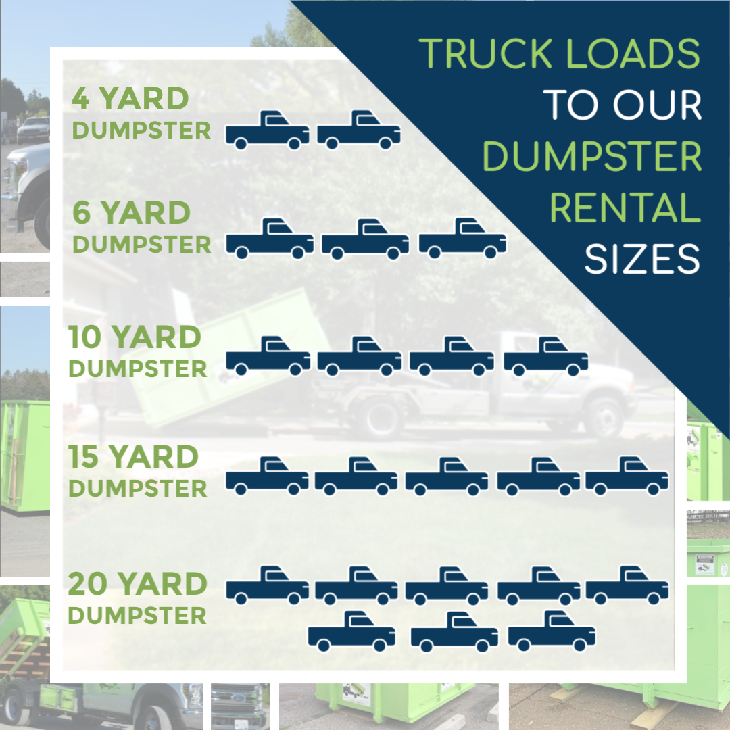
As a rough guide to the rental side, residential dumpsters run from 4 to 20 cubic yards. A 4-yard bin holds about two pickup truck loads, a 6-yard about three, a 10-yard about four, a 15-yard about five and a 20-yard about eight, assuming level beds and light to medium material. Heavy material fills the weight allowance before it fills the space. Use those equivalences to turn your pickup-load count from above into a bin size, then confirm it on the what size dumpster do I need page, which covers dimensions and weight limits by project.
Step 2: Check Vehicle and Facility Limits
Two sets of limits decide how many trips self-hauling takes, and both are easy to find before you start:
Vehicle payload. The maximum you can carry is on the door-jamb sticker and in the owner's manual as payload or GVWR. A load of wet drywall or broken concrete can exceed a half-ton pickup's payload in a single bed, so for dense material the trip count is set by weight, not space. Trailers add capacity but need a hitch rating and, in some jurisdictions, brakes and a permit.
Facility rules. Call or check the website of the landfill or transfer station you'd use. Confirm: hours, whether residential self-haulers are accepted, the fee basis (per load, per weight, minimum charge), accepted and refused materials, whether loads must be sorted, tarped or covered, and payment method. Fees and rules are set locally and vary by county and province; a facility that takes a contractor's load may not take yours.
Rental equipment. If you'd rent a truck or trailer to haul, note its daily rate, mileage charge, deposit and the return cleaning condition.
Step 3: Estimate Trips and Labor
With the quantity from Step 1 and the limits from Step 2, work out the self-haul side:
Trips = total volume ÷ what your vehicle carries per load (use the lower of the volume and weight limits).
Time per trip = loading at home + drive to facility + queue and unloading + drive back. Facility distance and wait times are the variables people underestimate; one round trip on a Saturday can take half a day.
Labor = who loads at home and unloads at the facility, how many times. Self-hauling means lifting every item twice. If you'd pay helpers, that's a cost; if it's you and a friend, it's hours.
Fuel and wear = trips × round-trip distance at your vehicle's consumption, plus any rental charges.
Step 4: Request Comparable Rental Terms
Now get the rental side in writing so you're comparing like with like. A quote for your address should state the container dimensions, the weight allowance included, the number of days included, what's excluded, delivery and pickup, and the charges for extra weight, extra days or prohibited items. Ask for it as a total for your project, not a headline price. To see what each line means, check the components of a local rental quote, and for typical price ranges by size and what moves them, see how much it costs to rent a dumpster.
Match the assumptions: same material, same total quantity, same timeframe. If the facility you'd self-haul to charges by weight, make sure the rental's weight allowance covers your estimate, or add the overage charge to the rental column.
Step 5: Compare Total Effort and Cost
Fill in the table with your own numbers. Leave a line blank rather than guessing; a blank is a reminder to ask.
Line
Self-hauling
Dumpster rental
Number of trips / deliveries
____ trips
1 delivery, 1 pickup (more if you need a swap)
Facility / disposal charges
$____ per trip × trips, or by weight
Included in quote up to weight allowance; overage $____
Vehicle or equipment
Fuel $____ + rental $____ + wear
None
Hours of your time
____ hours (load + drive + unload) × trips
____ hours loading once, at home
Paid help
$____ (lifting twice)
$____ (lifting once)
Items needing a separate route
$____ (may be refused at the gate)
$____ (excluded from the bin; same separate route)
Days the debris sits on your property
Until the last trip
Included rental period; extra days $____
Total cost
$____
$____
Total hours
____
____
Two things the table doesn't price: the risk of a refused load after you've driven it there, and the value of having the debris leave the property on a date you chose. Weigh those alongside the totals.
Step 6: Choose the Suitable Route
The pattern that usually comes out of the table:
Hauling it yourself fits when the pile is one or two pickup loads of light material, the facility is close and accepts residential loads, you have the vehicle already, and your time that day is free.
Renting a dumpster fits when the trips would run past two or three, the material is dense, the facility is far or restrictive, the debris arrives over several days, or you'd be paying for a vehicle or help either way.
Neither alone fits when a large share of the pile is separate-route items; handle those first, then re-run the comparison on what's left.
If the rental column wins or it's close, the next task is to estimate dumpster rental costs for your project in more detail. Once the material, labor and access questions are settled, check service at your project address to confirm a local operator covers you and get the written quote the comparison needs.